
History & Gold Rush
Step Back in Time: How to Spend 48 Hours in Dawson City
7 min read
Step Back in Time: How to Spend 48 Hours in Dawson City
A town frozen in 1898
The first thing you notice in Dawson is that the streets are dirt and the sidewalks are wood. This is not set dressing; it is a practical response to permafrost, which heaves and shifts anything built on it. Whole rows of false-fronted buildings tilt at gentle angles, propped and preserved rather than straightened, so that the town looks much as it did when the rush was on. Parks Canada maintains many of the key structures and runs excellent guided walking tours that bring the characters and chaos of the era vividly to life.
What surprises most visitors is that Dawson is a working town rather than a museum. People live here year-round, in a place where winter temperatures routinely fall far below anything most of us have experienced and the population shrinks to a fraction of its summer size. The grocery store, the school, and the post office are on the same streets as the historic sites. That mixture — genuine daily life inside a preserved gold-rush townsite — is what stops it feeling like a theme park.
Getting there
Dawson City sits about 530 kilometres north of Whitehorse on the Klondike Highway. The road is paved the whole way and the drive takes around six hours without stops, realistically closer to eight with fuel, food, and the pull-outs you will not be able to resist. There is also scheduled air service from Whitehorse for anyone short on time. In summer a vehicle ferry crosses the Yukon River to the far bank and the Top of the World Highway toward Alaska.
Because the drive is long, the standard mistake is to arrive late on day one and leave early on day three, which leaves a single usable day. Aim to arrive by mid-afternoon so that the first evening is genuinely yours. If you are coming from Alaska over the Top of the World Highway, check ferry and border operating seasons before committing — both are summer-only, and the timing catches people out every year.
Panning, dredges, and the goldfields
To understand Dawson you have to drive out to the goldfields that created it. Bonanza Creek Road leads to Discovery Claim, the very spot where the 1896 strike was made, now a quiet interpretive site along the creek. Nearby stands Dredge No. 4, a vast wooden gold dredge the size of an eight-storey building that once floated in its own pond, chewing through the valley floor and spitting out the tailings you see ridged across the landscape. Several operators will set you up with a pan and a patch of creek so you can try for colour yourself; finding even a few flecks of gold in the bottom of the pan is a thrill that connects you directly to everyone who ever knelt in this cold water hoping for more.
Allow a half day for the goldfields, more if you intend to pan seriously. The road out is gravel but ordinary cars manage it in summer, and the drive itself is part of the point: mile after mile of turned-over ground, active claims with machinery working, and the occasional cabin. Remember that many claims are private and still being mined. Stick to the interpretive sites and the commercial panning operations rather than wandering onto someone’s ground with a pan, which is both trespassing and a fast way to meet an unhappy miner.
Climbing the Midnight Dome
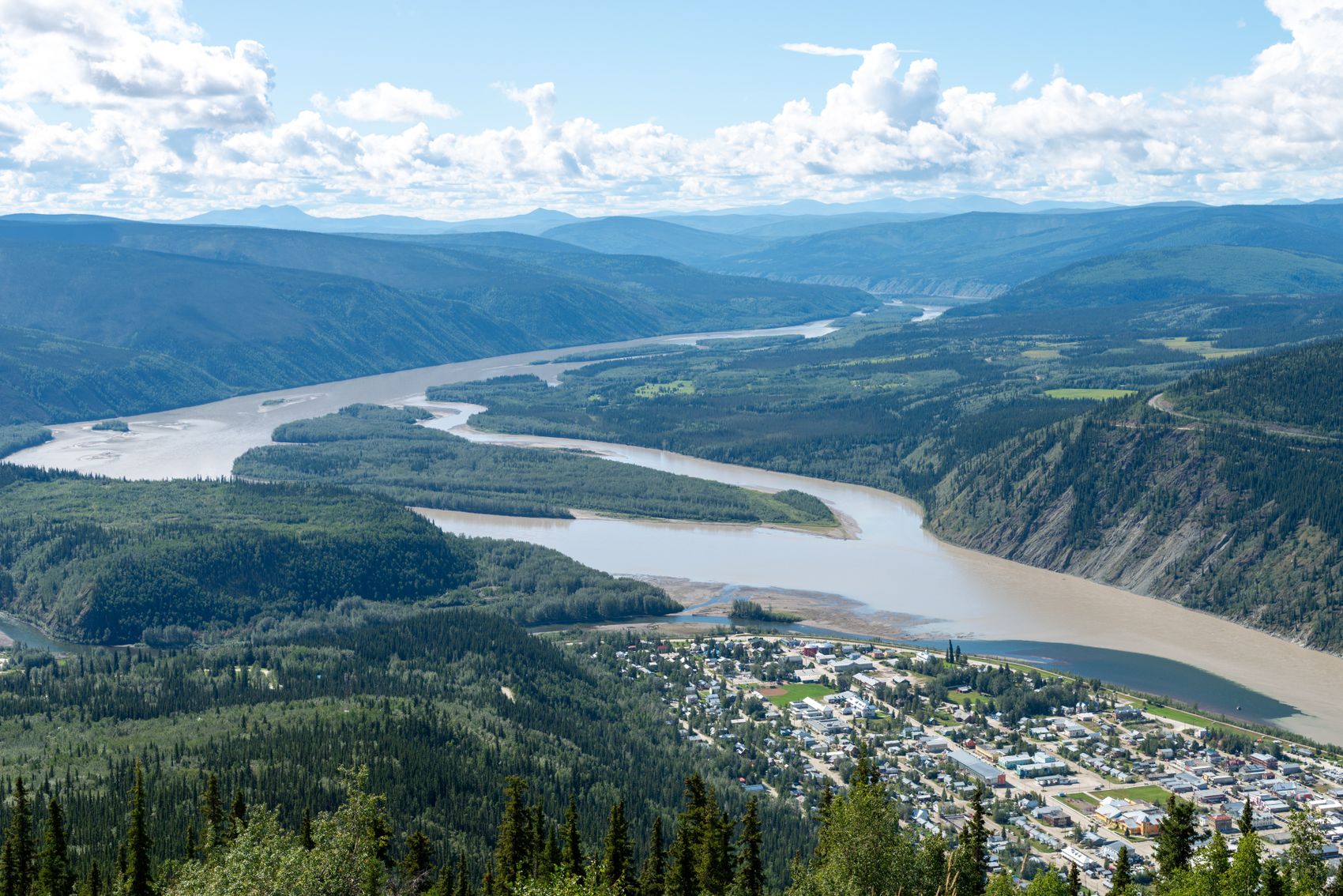
For the view that puts it all in context, make your way up the Midnight Dome, the hill that rises behind town. From the top you look down on the confluence of the muddy Klondike and the broad Yukon, out over the goldfields, and across a landscape that seems to roll on without end. On the summer solstice locals gather here to watch the sun refuse to set, and the name suddenly makes perfect sense.
You can drive to the top on a narrow road that climbs steeply out of town, or walk up on a trail if you want to earn it — allow a couple of hours return and expect a steady climb. Late evening is the best time in summer, when the low sun turns the tailings and the rivers gold and the whole valley is lit sideways. Take a layer; it is noticeably cooler and windier up there than on the boardwalks below.
Nights in Dawson
Dawson does not go quiet after dark, at least not in summer. Diamond Tooth Gerties, Canada’s oldest gambling hall, serves up nightly can-can shows and the clatter of roulette wheels in a room that feels lifted straight from the rush. The town’s bars and cafes fill with a mix of locals, seasonal workers, artists, and travellers, and conversations run long under the endless light. For the truly adventurous there is the Sourtoe Cocktail at the Downtown Hotel — a shot garnished with a genuine, preserved human toe, which you are invited to let touch your lips as you drink. Thousands have done it; you receive a certificate, and a story you will tell forever.
Two practical notes. Bring cash, because several of the smaller establishments are unreliable about cards and the ATMs in town are few. And accept that you will stay up far later than you intended: in June and early July it never really gets dark, your body has no idea what time it is, and the entire town operates on the assumption that sleep is negotiable. An eye mask is a serious recommendation, not a joke.
Culture beyond the rush
It would be a mistake to treat Dawson as only a gold-rush theme park. This is the traditional territory of the Tr’ondëk Hwëch’in, whose history here stretches back thousands of years before any prospector arrived, and whose cultural centre offers a deeper and more honest reading of the land. The town also nurtures a surprising arts scene, anchored by the Klondike Institute of Art and Culture and by the Dawson City Music Festival, which packs the summer streets with sound.
Give the cultural centre real time rather than treating it as a box to tick. The story it tells — of a people who lived at the mouth of the Klondike River, fished the salmon runs, and were displaced within months when tens of thousands of strangers arrived — reframes everything else you will see over the two days. The gold rush was a catastrophe for the people who were already here, and Dawson is one of the few places that says so plainly.
A workable two-day plan
Day one: arrive by mid-afternoon, walk the townsite with a guided tour or on your own with the interpretive panels, and spend the first evening at Gerties or in the bars. Day two: drive out to the goldfields in the morning for Discovery Claim, Dredge No. 4, and an hour of panning; return for the cultural centre in the afternoon; then take the Midnight Dome late in the evening for the light. That leaves the second night free for whatever you skipped, including the toe.
If you have a third day, spend it on the river. Local operators run boat trips, and the water is the way everyone arrived here before the highway existed. Alternatively, drive across on the ferry and up the Top of the World Highway far enough to look back down at the town and the river from above — one of the best views in the territory, and an hour well spent.
When to go
Peak season is short: roughly June to early September, when the tours run, the ferry operates, and the town is fully awake. July is the busiest and warmest month. Late August into early September brings autumn colour, fewer visitors, and the first properly dark nights, which means aurora becomes possible again — a combination many people prefer.
Outside that window Dawson is a very different proposition. Many businesses close, the ferry is replaced by an ice bridge once the river freezes hard enough, and the cold is severe. Winter visits are entirely possible and genuinely memorable, but they need planning and a tolerance for temperatures that make the summer version of this article look like a different town.
Making the most of a visit
Give Dawson at least two nights so you are not rushing between the town, the goldfields, and the Dome. Book accommodation well ahead in July and August, when beds are scarce. Bring layers, because even summer nights can turn cool, and cash for the smaller establishments. And leave time simply to wander — to follow a boardwalk to its end, to read the plaques, to strike up a conversation. Dawson rewards curiosity, and it has a way of getting under your skin. Many visitors arrive planning one night and find themselves rearranging their trip to stay another.
Frequently asked questions
How far is Dawson City from Whitehorse?
About 530 km on the paved Klondike Highway, roughly six hours of driving without stops and closer to eight in practice. There is also scheduled air service from Whitehorse.
Is two days enough for Dawson City?
Two nights is the sensible minimum. That gives you one full day for the goldfields, the cultural centre, and the Midnight Dome, plus two evenings in town without rushing.
Can I try gold panning?
Yes. Several commercial operators near Bonanza Creek supply a pan and a stretch of creek. Do not pan on your own on the claims, which are private and often still being actively mined.
When is the best time to visit?
June to early September, when tours run and the ferry operates. Late August and early September add autumn colour, thinner crowds, and dark enough nights for aurora.
Where to stay
Rooms worth pairing with this guide.

Ready to plan this trip?
Real prices for the places this piece names.


