
Places & Day Trips
Engineering for Nature: The Whitehorse Fishway & Salmon Ladder
5 min read
Engineering for Nature: The Whitehorse Fishway & Salmon Ladder
Why the ladder exists
When the dam was built, it blocked the ancient migration route of salmon returning to spawn upstream. The fishway — a long, gently ascending wooden channel — gives the fish a way around the dam, letting them continue a journey their ancestors have made for millennia. It’s a working piece of conservation infrastructure, not just an exhibit.
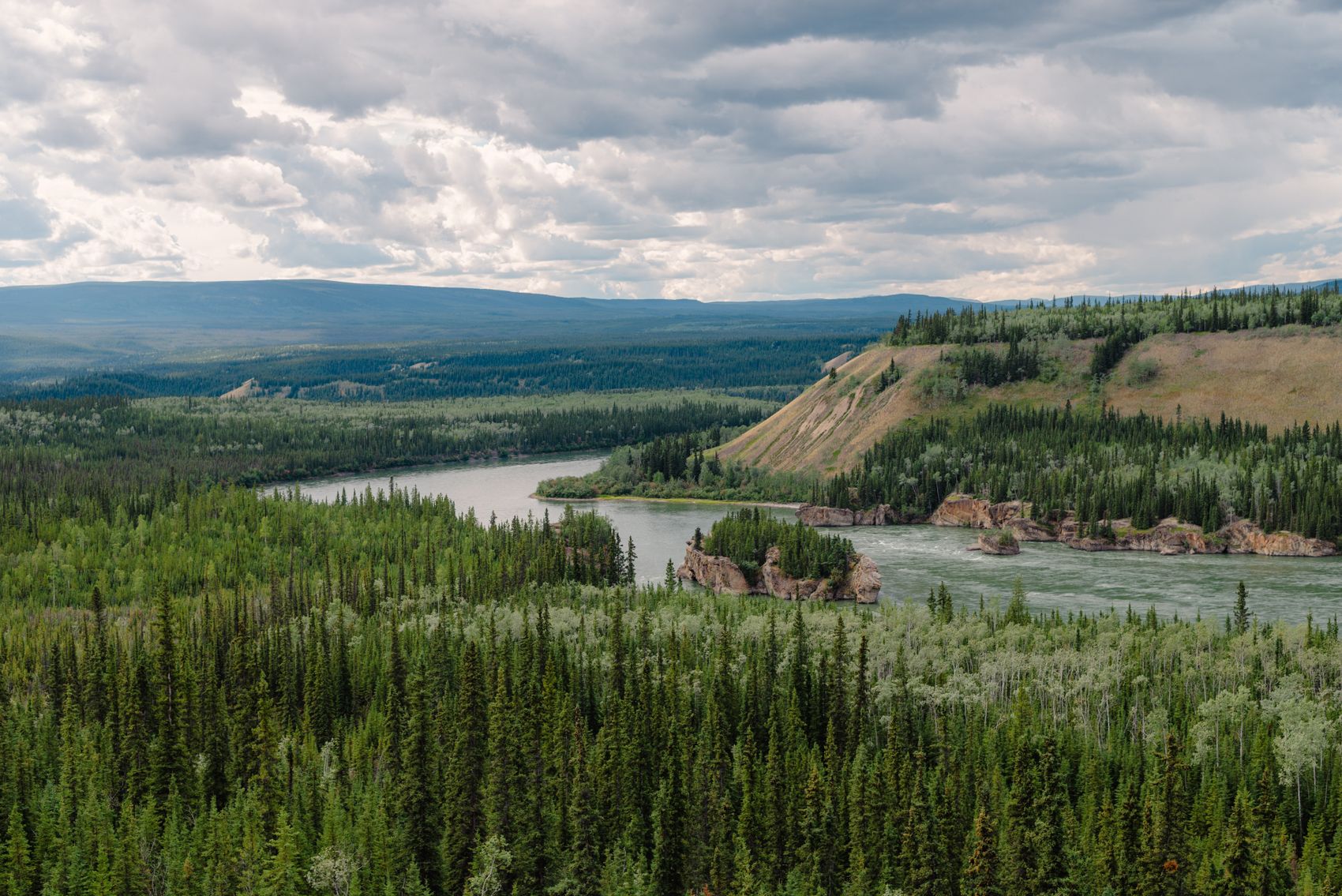
The dam sits at the top of the Whitehorse Rapids, where the Yukon River leaves Schwatka Lake, and it has been generating power for the city since the late 1950s. Every chinook heading for spawning gravel above Whitehorse has to get past it. The fishway is the answer: rather than lifting fish over the wall, it gives them a long, shallow climb they can make under their own power.
The design is deliberately unglamorous. Water is fed down the wooden channel fast enough that the fish sense it and follow it, but slow enough that they can make headway, with resting pools along the way. It works because it asks the salmon to do exactly what they already do — swim upstream against current — rather than expecting them to learn anything new.
What you’ll see
Inside the interpretive facility, viewing windows let you watch the big fish rest and push upstream against the current — remarkable up close, given how far they’ve already come. Displays explain the salmon’s life cycle, the challenges they face, and the First Nations relationship with the river and its fish. A counting operation tracks the run.
It is a quieter experience than most people expect. There is no guarantee of a fish in the window at the moment you look in, and when one does appear it is usually holding still in the current rather than leaping. What you notice is the size and the condition: these are big fish, worn down by weeks of swimming, and this stretch of ladder is close to the end of everything they have.
Timing your visit
The salmon run is seasonal, typically peaking in mid-to-late summer, so check current timing before you go — arrive too early and the ladder may be quiet. The facility is on the Whitehorse waterfront near the dam, an easy addition to a day in the city.
Outside the run the building may be closed or only partly staffed, so this is a stop worth checking on rather than making a hopeful drive-by. Late July into August is the usual window, but the run shifts from year to year with water temperature and flow, and a late season can push everything back by a week or more.
Why it matters
Yukon chinook numbers have faced serious pressure in recent years, making the fishway a focal point for conservation awareness as well as a great visit. Understanding the salmon’s epic journey — and the threats to it — adds real weight to what could otherwise be just a curiosity.
The counting operation matters as much as the viewing windows do. Knowing how many fish arrive, and when, is the basis for management decisions right down the river, and a poor count at Whitehorse is felt all the way to the coast. Plenty of visitors find the numbers board the most interesting thing on site.
Equal parts natural wonder and human ingenuity, the Whitehorse Fishway is a quietly moving stop: proof that with a little effort, people and wild salmon can share the same river.
The journey behind the fish
The scale is the part that sticks. Yukon River chinook enter the river from the Bering Sea on the Alaska coast and swim roughly 3,000 km inland, climbing the whole way, to reach the gravel where they hatched. They do not feed once they are in fresh water. Everything the trip demands — muscle, fat, the energy to build a nest and spawn — is carried with them from the sea.
By the time they reach Whitehorse they are near the far end of that. The fish in the ladder are among the longest-travelled salmon anywhere on earth, with only a short stretch left before they spawn and die. Watching one hold position in the current for a few seconds is a strange thing: an animal most of the way through a one-way trip, pausing.
Fitting it into a day in Whitehorse
The fishway sits by the dam on the east side of the river, a short drive or a decent walk from downtown along the waterfront. Half an hour is enough for a quick look; an hour is better if the run is on and you want to read the displays and watch the windows properly rather than glancing through.
It combines well with the obvious neighbours. Schwatka Lake is immediately upstream, Miles Canyon and its trails are a few minutes further, and the S.S. Klondike and the downtown museums are back the other way. A morning that takes in the canyon, the dam and the fishway makes a coherent story about what the river does here and what has been done to it.
What to bring, and what to expect
There is nothing technical about the visit. Bring a jacket — the viewing area is dim and cooler than outside — and expect low light, which makes photography through the glass difficult. Flash is both useless and unwelcome. Children generally do well here, but the pace is slow, and it helps to set expectations before you walk in.
The most common mistake is treating it as a five-minute photo stop. Fish come past irregularly, and people who stay ten or fifteen minutes almost always see more than those who glance and leave. If staff are on site, ask what the count has been that week; they will tell you honestly whether it is worth waiting.
A river under pressure
Chinook returns on the Yukon have fallen far enough in recent years that harvest has been sharply restricted along the length of the river, in both Alaska and Yukon, and First Nations who have fished these runs for thousands of years have gone without. That context is unavoidable at the fishway, and the interpretation does not try to avoid it.
It changes what the ladder means. Built as an engineering answer to a dam problem, it now doubles as a monitoring station and a public reminder that the run is not guaranteed. Visiting in a low year is bleaker than visiting in a good one, and arguably more useful.
Frequently asked questions
When can I see salmon at the fishway?
The chinook run is seasonal, usually peaking in mid-to-late summer. Check current timing before visiting, as the ladder is quiet outside the run.
What makes the fish ladder special?
It’s billed as the world’s longest wooden fish ladder, built to help chinook salmon bypass the Whitehorse hydro dam, with underwater viewing windows.
How long is the salmon migration?
Yukon River chinook travel roughly 3,000 km from the Bering Sea to spawn — one of the longest salmon migrations on Earth.
How long should I allow for a visit?
Half an hour covers a quick look, an hour if the run is active and you want to read the displays and wait at the windows. It combines easily with Miles Canyon and the Whitehorse waterfront.
Is it good for kids?
Yes, though it is a slow, quiet stop rather than a hands-on one. Set expectations first: fish appear irregularly, the viewing area is dim, and the reward comes from waiting a little.
Where to stay
Rooms worth pairing with this guide.

Ready to plan this trip?
Real prices for the places this piece names.


