
History & Gold Rush
Climbing Aboard the S.S. Klondike: The Sternwheeler That Shaped the North
6 min read
Climbing Aboard the S.S. Klondike: The Sternwheeler That Shaped the North
The age of the sternwheelers
For the first half of the 20th century, flat-bottomed sternwheelers were how almost everything moved through the interior. They hauled silver-lead ore downriver, carried supplies and settlers up, and linked communities that had no roads. The river was the highway, and boats like the Klondike were its trucks and buses combined.
Dozens of boats worked the Yukon watershed across the riverboat era, most of them built from local spruce and run by pilots who knew the channel from memory. Charts were close to useless, because the river rewrote itself at every spring breakup. What a pilot was really paid for was knowing where this year's gravel had moved to and how much water sat over it.
The season was short, and it governed everything. The Yukon River freezes for roughly half the year, so an entire year of freight had to move in the open-water months between. Boats were hauled out in autumn, patched up in the shipyards over winter, and put back in the moment the ice went out. That rhythm of frantic summer and dormant winter still shapes how the territory works.
A boat built for the river
The Klondike was built for the Yukon’s shallow, braided channels: broad, flat, and powered by a huge stern paddlewheel that could push through water only a metre or two deep. Downstream to Dawson took a day and a half; the return upstream, against the current, took the better part of a week and burned enormous quantities of wood.
Fuel was the constant problem. The boats burned cordwood by the stack, and wood camps were spaced along the banks so crews could stop and load by hand. Woodcutters spent whole seasons living on the river to keep the supply coming. A run against the current consumed far more than the easy drift down, which is most of the reason the return trip took so much longer.
The shape follows from all of that. A deep keel would have grounded constantly, so there isn’t one. The hull is a broad flat tray that spreads a heavy load over as little draft as possible, and everything else is stacked above the waterline — freight low, passengers and crew on the decks above.
Touring the ship
Parks Canada has restored the vessel to its 1930s–40s heyday, and guided and self-guided tours take you from the freight deck to the passenger cabins, the galley, and the wheelhouse. Interpreters bring the crew and the era to life, explaining how the boats were loaded, navigated, and “grasshoppered” over sandbars with spars and winches.
What lands hardest is the layout. The freight deck is stacked with the kind of cargo the boat actually carried — ore concentrate, fuel, crates of supplies bound for stores hundreds of kilometres downriver — while the passenger accommodation above is small, tidy and obviously a different world. The galley, the crew quarters and the wheelhouse together tell you most of what you need to know about who did the work and who bought a ticket.
Planning a visit
The ship sits right in Whitehorse, an easy walk or short drive from downtown, and tours run mainly in the summer season. It pairs naturally with the nearby waterfront trail and the MacBride Museum for a half-day of Yukon history.
Allow around an hour for the ship itself, more if you take a guided tour and ask questions. Hours are seasonal and the interior is not always open outside the summer months, so check with Parks Canada before making a special trip. The exterior and the surrounding lawn are worth a look year-round, and the boat photographs well in low winter light with frost on the deck.
The end came when the road network reached the interior and the riverboats were suddenly obsolete. The S.S. Klondike survives as their monument — a chance to stand on the deck of the vessel that, for decades, was the beating heart of the territory.
Life on board
A run to Dawson was not a cruise. Passengers slept in narrow cabins, ate at set sittings, and shared the boat with whatever the freight deck was carrying that week. Crews were large by modern standards — deckhands, firemen, engineers, cooks, stewards, a pilot and a mate — because almost everything, from loading cargo to feeding the boilers, was done by hand.
The work was seasonal and often ran in families, and plenty of Yukoners can still point to a grandparent who worked a riverboat. First Nations woodcutters, deckhands and pilots were part of the river economy throughout, a fact the interpretation on board now states plainly rather than leaving in the background.
The route it ran
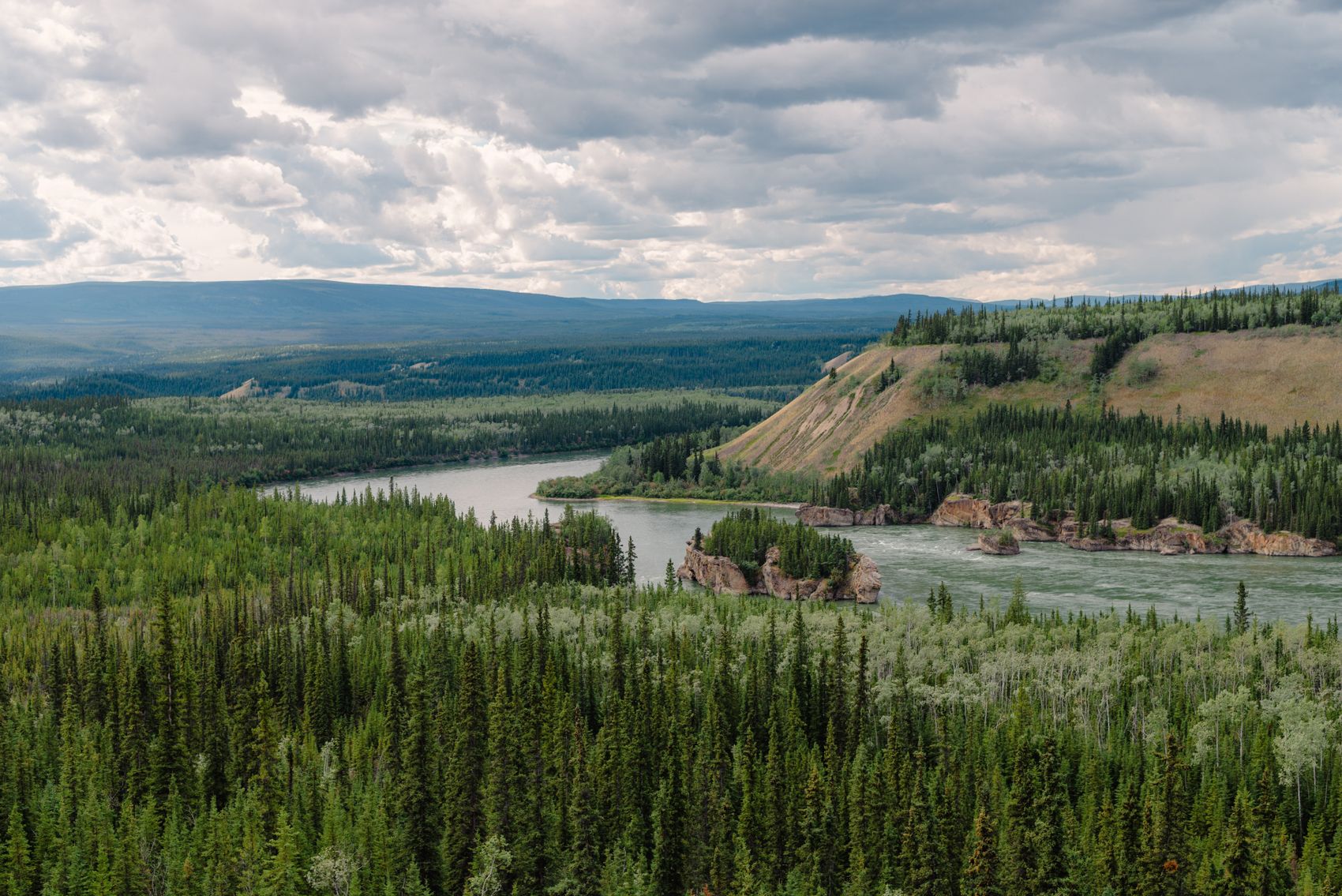
Downstream from Whitehorse the boat crossed Lake Laberge, ran the narrow Thirtymile stretch, passed Carmacks, threaded Five Finger Rapids, and carried on to the Klondike goldfields at Dawson City. Those places are all still there, and most of them are reachable from the Klondike Highway, which loosely shadows the river.
Driving that highway after seeing the boat changes it. What now takes a comfortable half-day by car took a day and a half downstream and closer to a week coming back, with wood stops every few hours and no way at all to hurry the current. It is the cheapest way to understand why the territory reorganised itself so completely once the roads arrived.
Riverboat Whitehorse, beyond the ship
Whitehorse is where it is because of the water immediately upstream of it. Boats could not run Miles Canyon or the Whitehorse Rapids, so cargo had to be transferred around them — first by tramway, later by the White Pass railway up from Skagway. The town grew at that break in the transport chain, and the sternwheeler fleet was based here for the same reason.
Most of the evidence is still walkable. Miles Canyon is a short drive south of downtown with trails along the rim, Schwatka Lake now covers the water that used to be the rapids, and Shipyards Park marks the ground where boats were built and overhauled. The waterfront path links a good part of it, which makes a riverboat half-day easy to put together on foot.
When to go
Summer is the straightforward answer: the site is fully staffed, the interpretation is running, and daylight is effectively unlimited around the solstice. It is also when Whitehorse is busiest, so mornings tend to be quieter than mid-afternoon, when tour groups and highway traffic arrive together.
Off-season visitors should plan around a closed interior rather than be disappointed by one. May and September are pleasant and much less crowded, but hours can be reduced, and in deep winter the ship is a photograph rather than a tour. If riverboat history is the reason you came to Whitehorse, come between roughly June and August.
Frequently asked questions
Where is the S.S. Klondike?
On the Yukon River waterfront in Whitehorse, an easy walk or short drive from downtown. It’s a national historic site operated by Parks Canada.
Can I go inside?
Yes. Guided and self-guided tours run mainly in summer and take you through the freight deck, cabins, galley, and wheelhouse.
Why were sternwheelers important?
Before highways, these shallow-draft riverboats were the main way freight, ore, and passengers moved between Whitehorse and Dawson City.
How long should I allow for a visit?
About an hour for the ship itself, or half a day if you combine it with the waterfront path, Shipyards Park and a downtown museum. Guided tours take longer than walking through on your own.
Is it worth seeing in winter?
The interior is generally closed outside the summer season, so a winter visit means seeing the ship from the outside. It still photographs well in frost and low light, but plan a summer trip if you want to go aboard.
Where to stay
Rooms worth pairing with this guide.

Ready to plan this trip?
Real prices for the places this piece names.


